aagainst the monopoly of builders and the interests of elite groups.
bagainst the need for global and smart cities.
cin favour of planning cities mainly for working class and poor people.
din favour of participation of peoples' groups in city planning.
AnswerUPSC’s answer is (d).
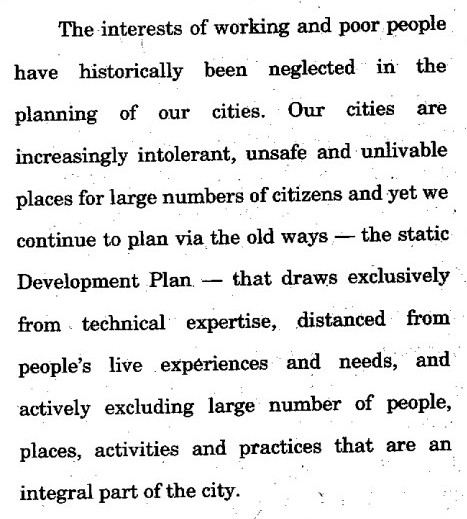
The passage criticises planning that draws only on technical expertise, ignores people's lived experience, leaves out many groups and activities, and has neglected working and poor people. The remedy it points to is planning that involves people's groups. It does not attack builders or global and smart cities, and it asks for inclusion of everyone, not planning mainly for the poor.
Why each option is right or wrong
(a) Wrong: builders are not mentioned.
(b) Wrong: global and smart cities are not discussed.
(c) Wrong: it wants inclusive planning, not planning mainly for one class.
(d) Right: it faults expert-only plans and implies that people's participation is needed.
Answer: UPSC’s key. Explanation: written by UPSC Grade, not by UPSC.