UPSC Mains answer evaluation
UPSC Mains answerevaluation, in2 minutes.
Photograph the answer you wrote, or type it. We read it, mark each part against how toppers of that paper write, and show you exactly what to change.
Your first 30 answers are free. No card needed.
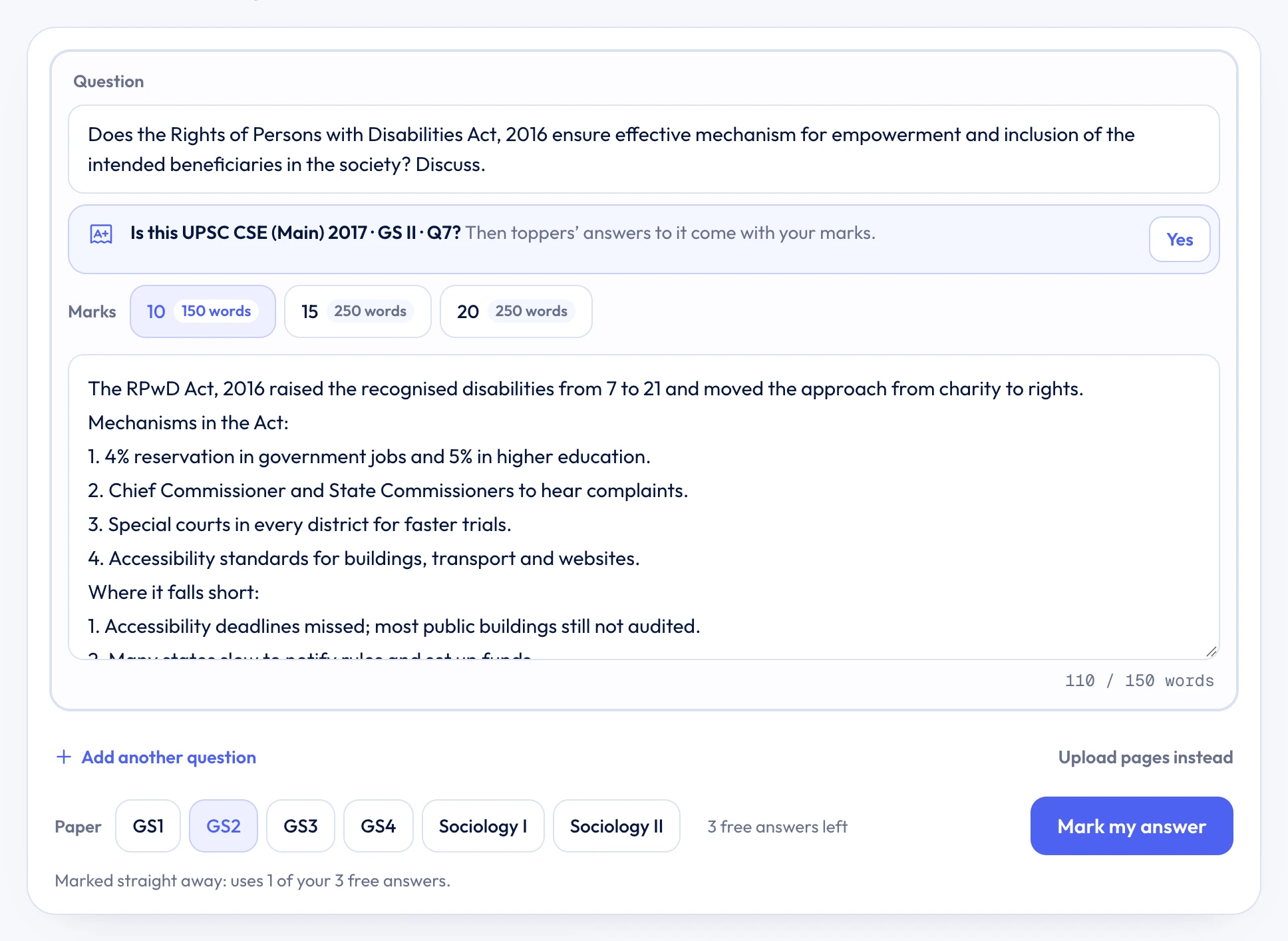
Upload or type
Photos, a PDF,or typed.
Photograph each page of the answer you wrote, or upload the PDF of a whole copy, and choose the paper. No pages to hand? Type the question and your answer instead. A UPSC question you type is recognised, so toppers’ answers to it come with your marks.
- JPG, PNG or HEIC photos, or a PDF; a copy up to 10 MB.
- One answer now, or a whole copy.
- Typed: up to 10 questions at once.
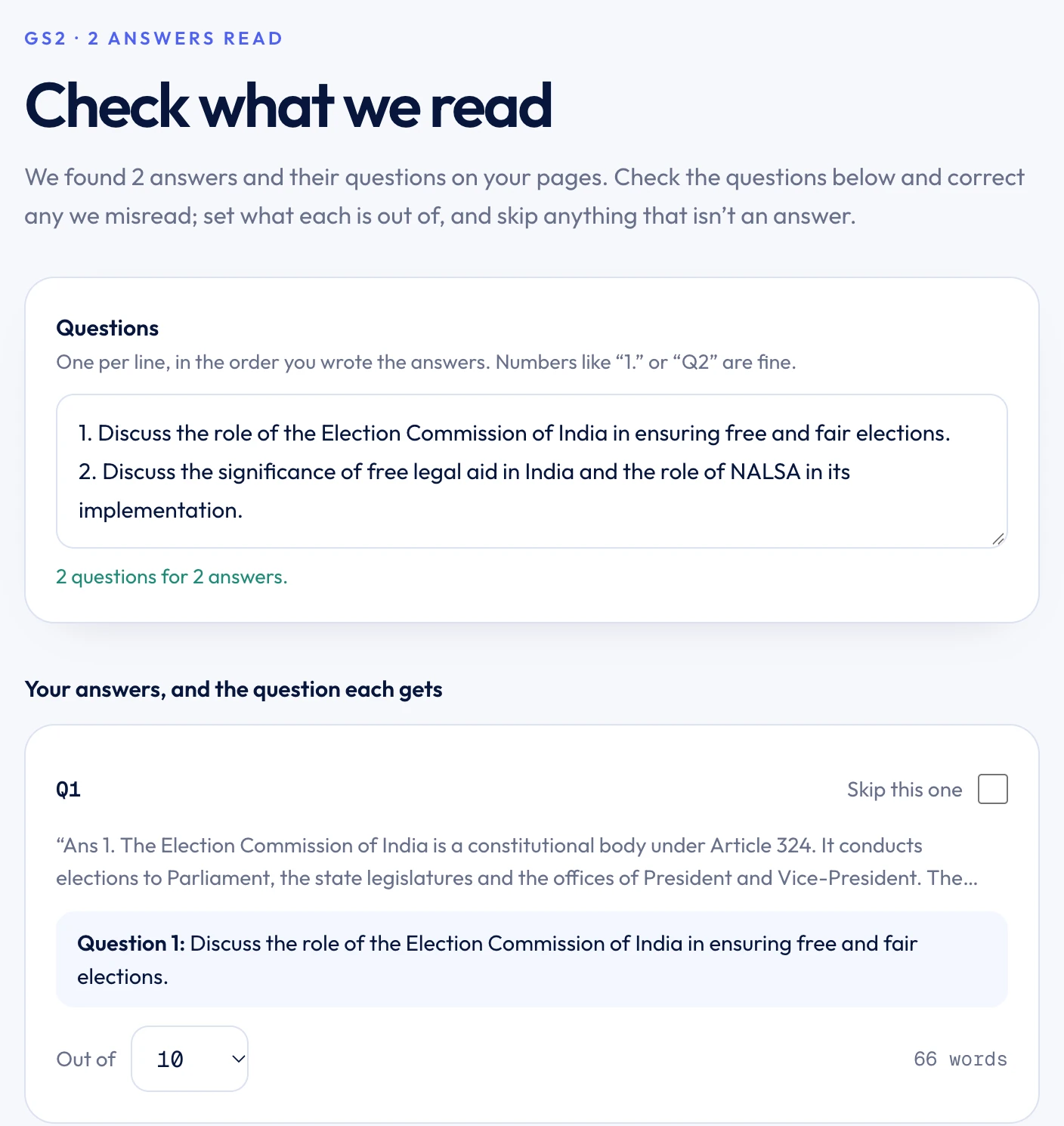
Check what we read
See what we read,before any marking.
We show you the questions we found on your pages and the answer under each. Fix a question we misread, write in one we couldn’t, set what each answer is out of, or skip a page that isn’t an answer.
- Nothing is marked until you say so.
- Each answer matched to its question.
- Each answer out of the marks its question carried.
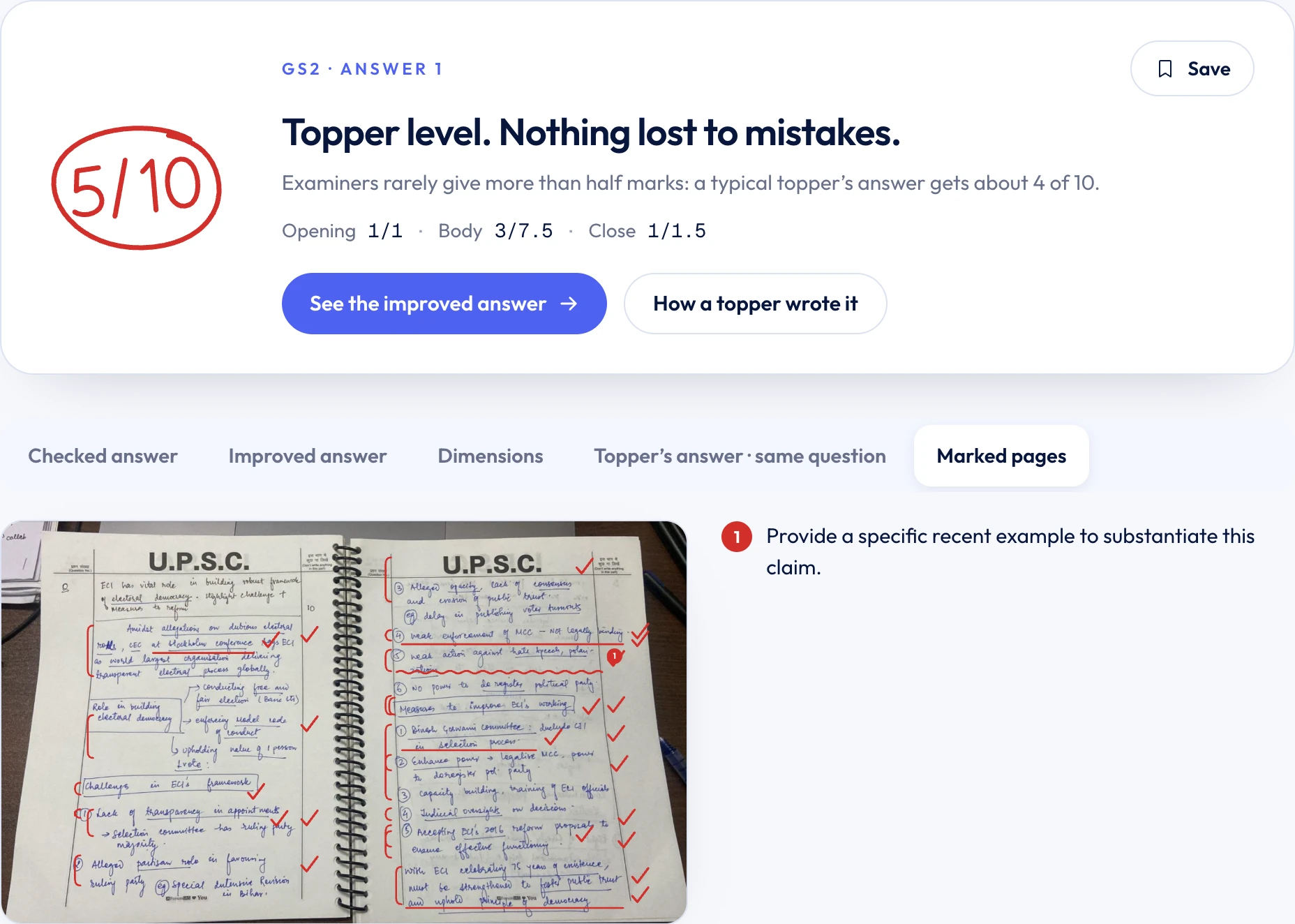
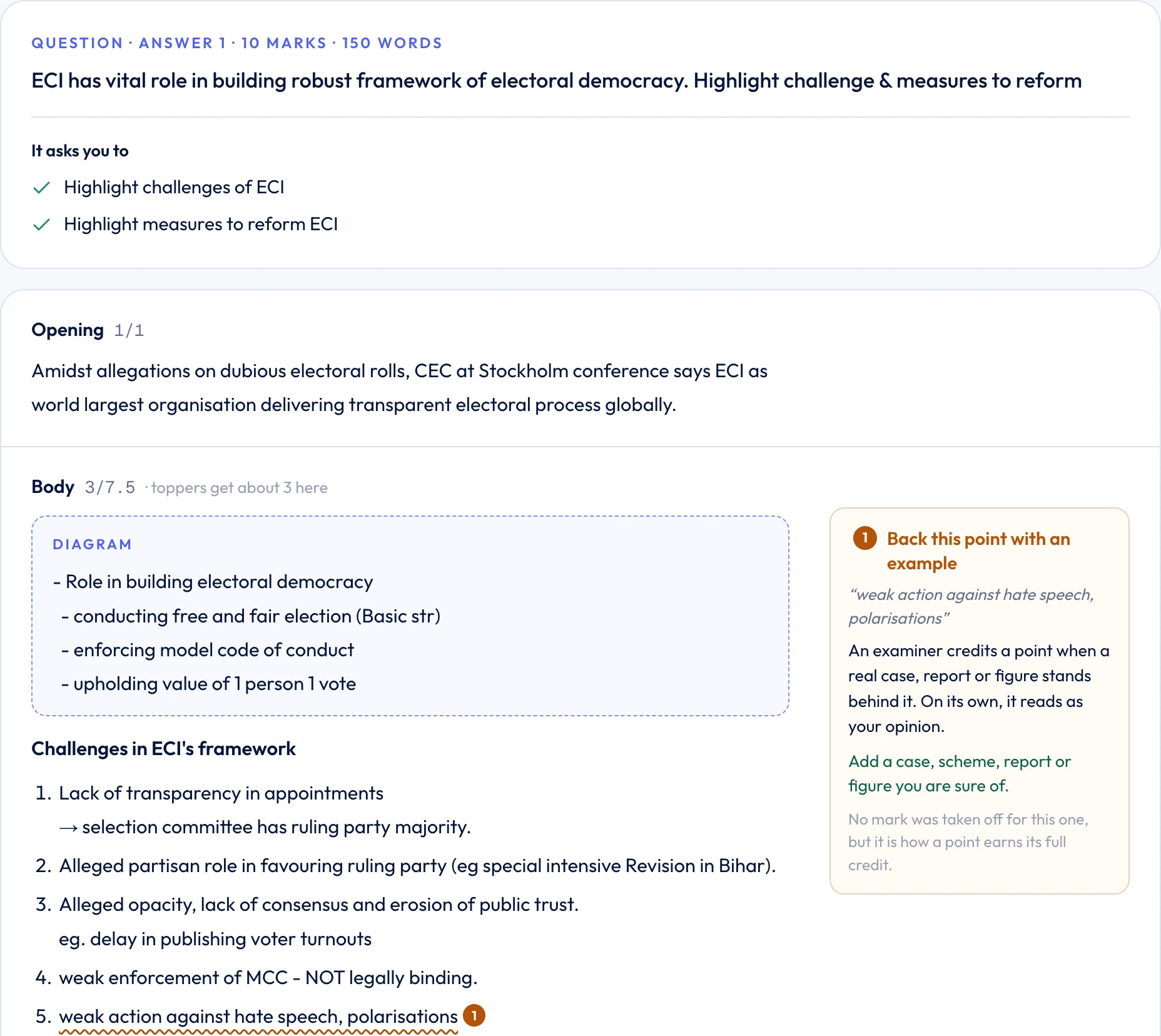
Marking
A mark for each part,and what cost marks.
Your opening, body and close are marked apart, against what toppers of that paper do. Each note sits beside the line it is about and says what to write instead.
- Opening, body and close, each with its own mark.
- What the question asked for, ticked off against what you wrote.
- A note on the line it is about, with what to try.
Improving
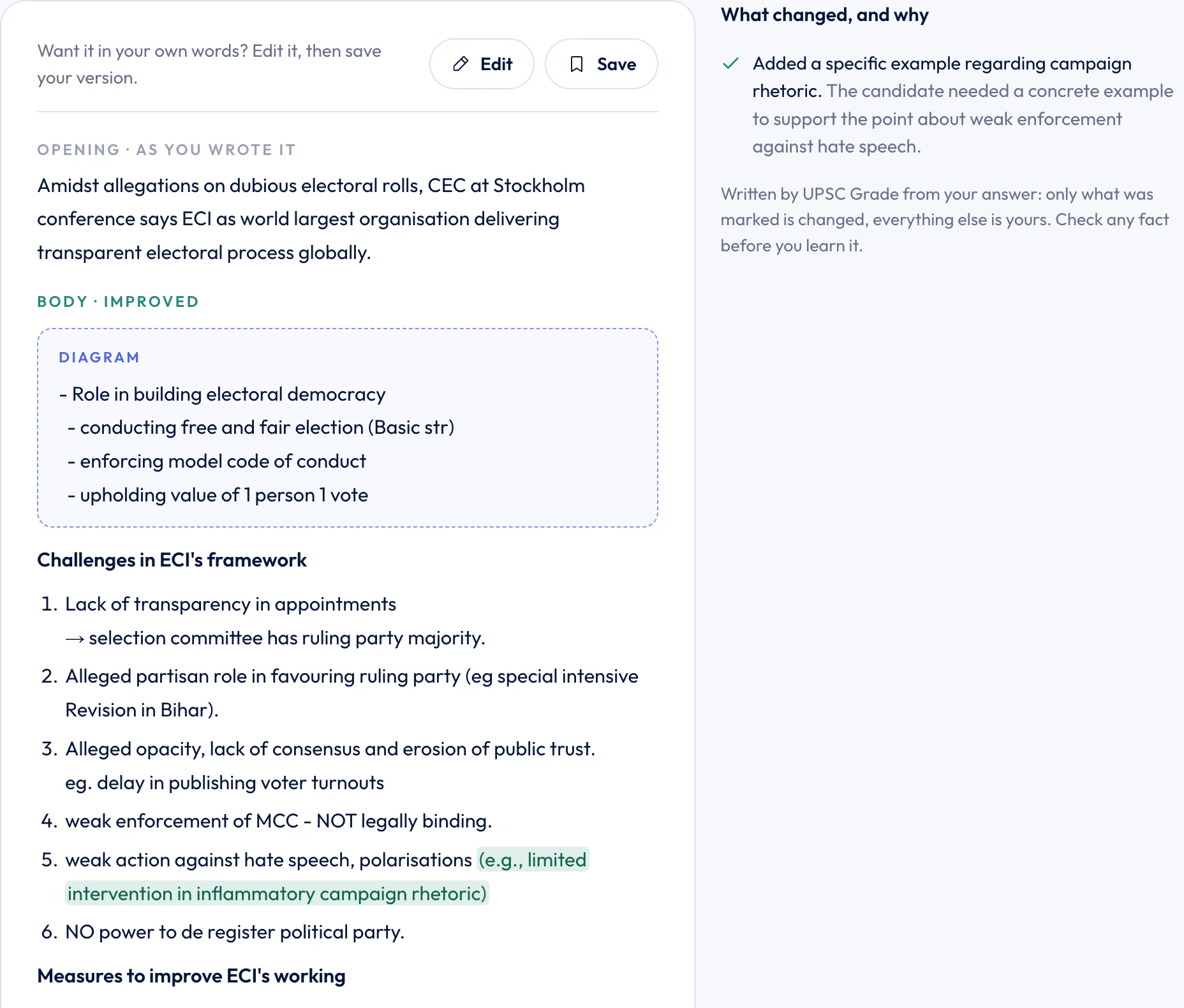
Your own answer,improved.
Not a model answer from somewhere else: yours, with only what was marked changed. You can edit it further and keep your version.
- Additions in green, cuts struck through.
- Each change listed with its reason.
- Everything else is left exactly as you wrote it.
Dimensions
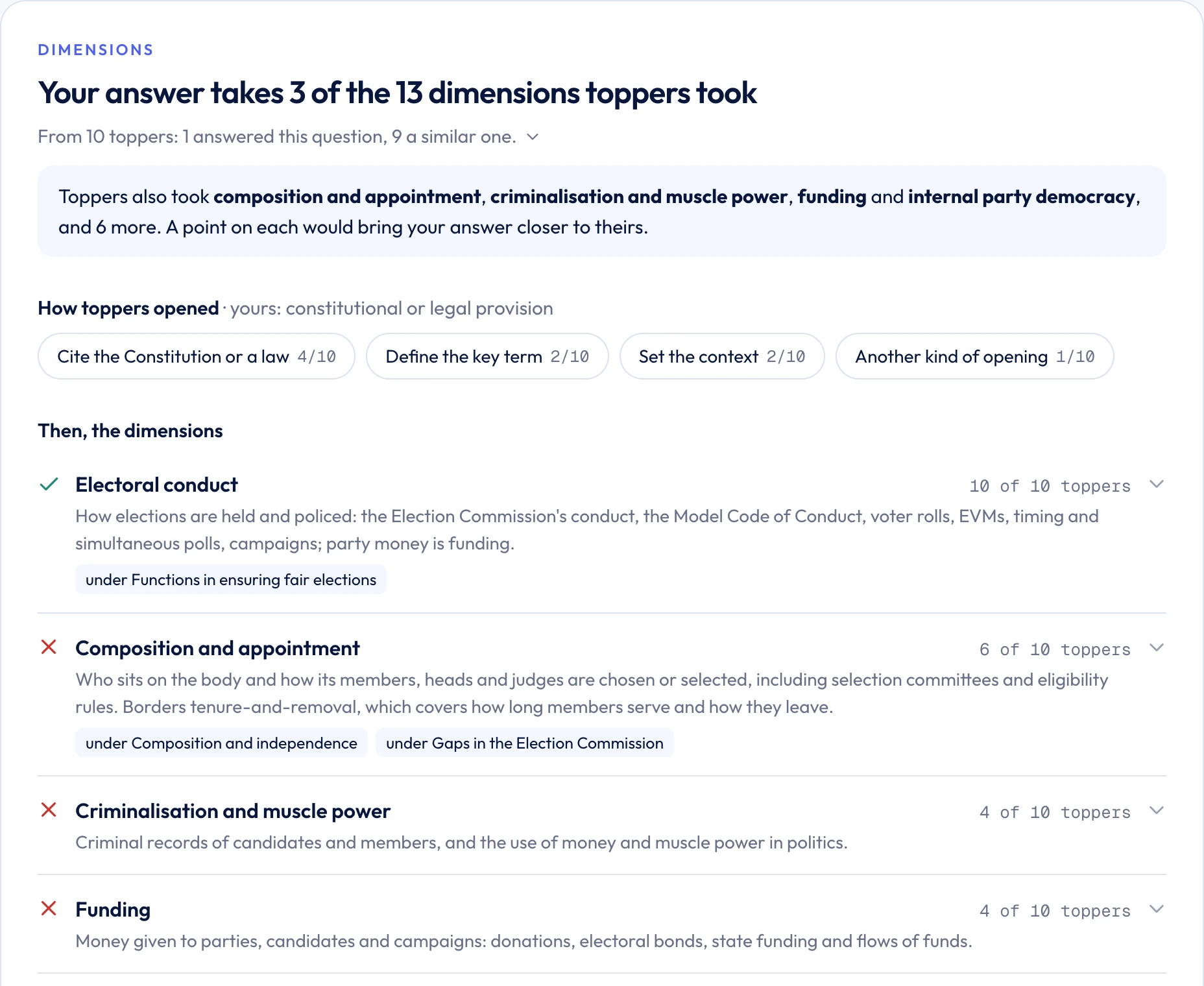
The angles toppers took,ticked against yours.
Toppers who answered the same or a similar question each took a few angles on it. See which of them your answer covers, which it missed, and the lines toppers wrote for each.
- How many toppers took each angle.
- Your own line, where you covered it.
- How toppers opened, beside how you did.
Comparing
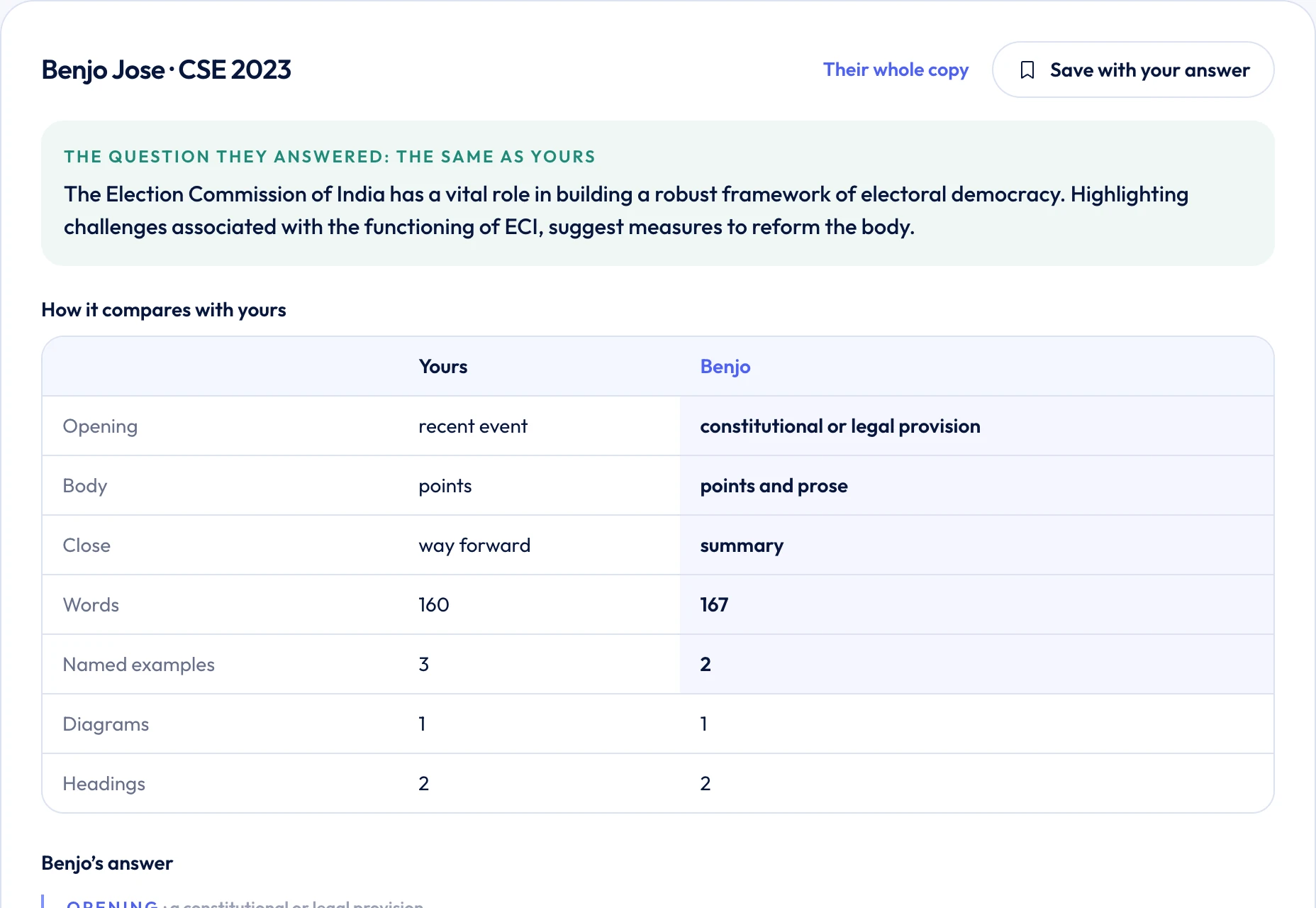
A topper’s answerbeside yours.
To the same question when a topper answered it, and otherwise to the closest one. See how each of you opened, built the body and closed, then read theirs in full.
- Yours and theirs, row by row.
- Their answer in its opening, body and close.
- Their original handwritten pages, a tap away.
What it marks
Any GS answer,as you wrote it.
No template: the page you wrote by hand, in the time the exam gives you, or the same answer typed.
GS1 to GS4, and Sociology
Each paper is marked by what its own toppers do.
English or हिन्दी
Hindi-medium answers are read and marked the same way.
Any question
Past UPSC questions and test-series questions alike.
An answer or a copy
Mark a single answer, or a whole booklet.
Photos, a PDF or typed
Straight from your phone’s camera, a scanned copy, or typed in.
Essay, and optional subjects other than Sociology, are not marked yet. Each answer marked uses one credit, and your first 30 are free, for life. A paper is marked until your credits run out, and the rest wait until you have more.
Nothing written yet?
Need a question to write today?
Write UPSC’s own Mains questions: one a day, a few on where you lose marks, or a whole past paper on a 3-hour clock.
Your next answer
Today’s answeris on your desk.
Photograph it or type it, and find out what it missed. Your first 30 answers are marked free.
Your first 30 answers are free. No card needed.