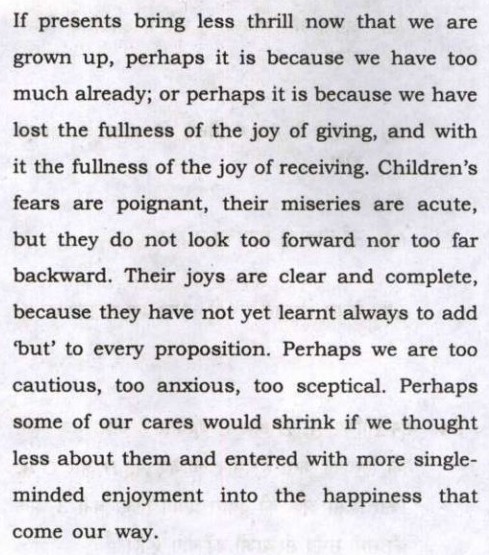
The author's advice is that adults would be happier if they brooded less on their worries and threw themselves fully into whatever pleasure came along, as children do, who are not busy with the future or the past. So the author is against worrying too much about the past and future. The passage laments partial joy and the loss of joy in giving, but as symptoms of that caution and worry, not as the thing being argued against.
Why each option is right or wrong
(a) Correct: the author wants less brooding over what is behind and ahead.
(b) Wrong: the author does not object to thinking about presents as such.
(c) Wrong: the author notes that adults feel less thrill but does not oppose it.
(d) Close but secondary: partial joy is described as an effect of too much caution and worry.
Answer: UPSC’s key. Explanation: written by UPSC Grade, not by UPSC.