aapplauding India's economic growth not only against its own past performance, but against other nations.
bemphasizing the need for economic growth which is the sole determinant of a country's prosperity.
cemphasizing inclusive growth where gains of growth are shared widely by the population.
demphasizing high growth.
AnswerUPSC’s answer is (c).
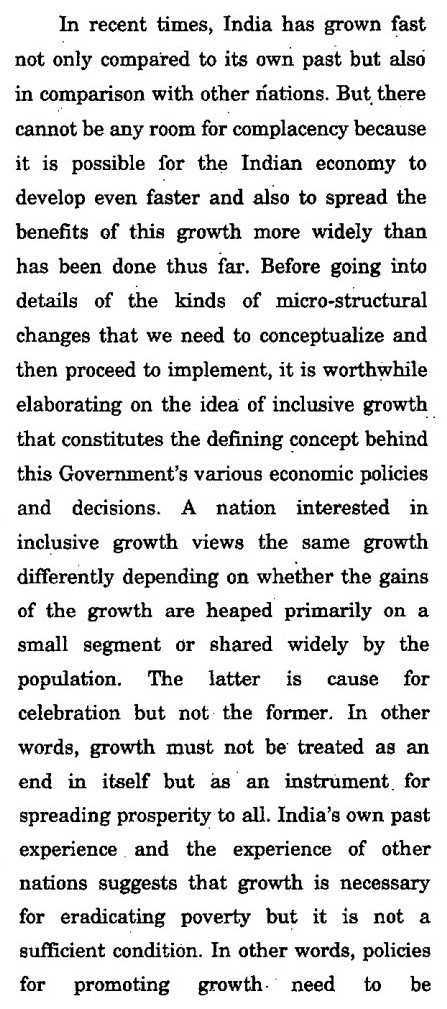
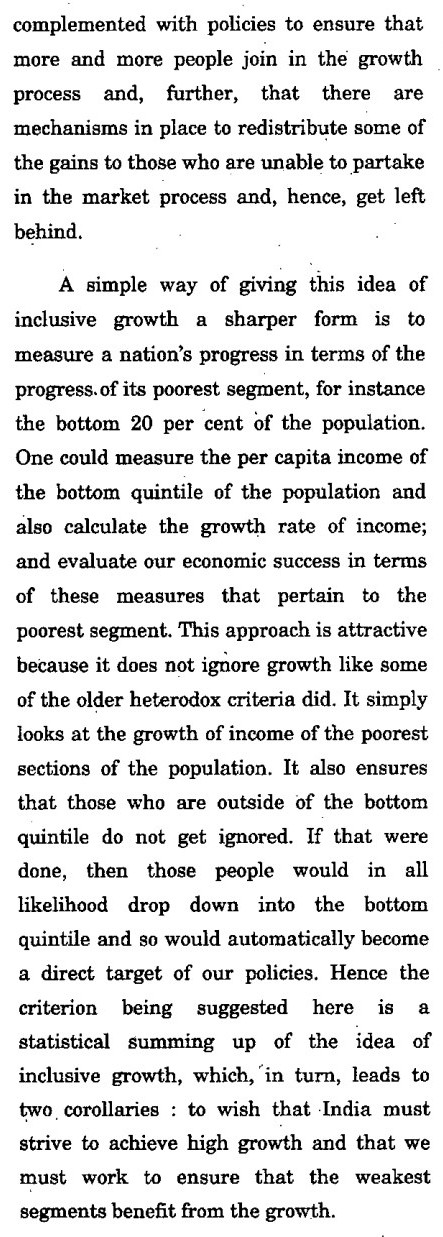
The author's whole argument is built around one idea: an economy's growth counts for most when most citizens share in it. Growth is presented as a means to wider well-being, not a goal in itself. The rest of the passage, including the remark on past performance and the poorest-fifth yardstick, serves that idea. High growth is only one of two aims the author draws out.
Why each option is right or wrong
(a) Praise of India's record is only the opening remark; the passage then warns against complacency and turns to sharing the gains.
(b) The passage says the opposite: growth alone is not enough, so it cannot be the sole determinant of prosperity.
(c) Right. The whole argument is that growth must be shared widely, with the poorest sections gaining.
(d) High growth is only one of two corollaries drawn at the end; benefits for the weakest are equally central.
Answer: UPSC’s key. Explanation: written by UPSC Grade, not by UPSC.