UPSC Prelims 2012 · CSAT
Question 4: Reading Comprehension
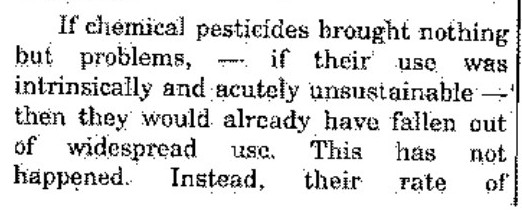
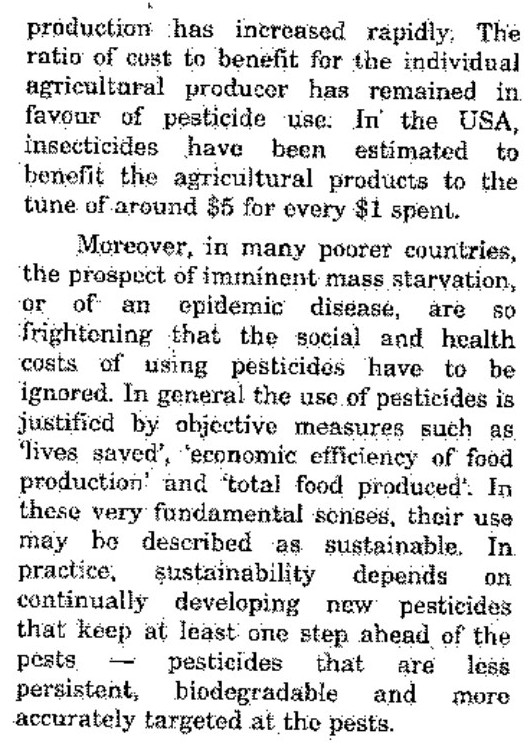
“The evolution of pesticide resistance is natural selection in action.” What does it actually imply ?
AnswerUPSC’s answer is (c).
Natural selection acts on variation already present in a population. When a pesticide is applied, susceptible individuals die, while the few that happen to carry resistant genes survive and breed, so resistant forms become common. That is why only some individuals in a population show resistance, which is what option (c) points to; the pesticide does not create resistance, it selects it. The printed passage never discusses resistance, so this question tests basic evolutionary biology.
Why each option is right or wrong
- (a) Wrong. Resistance is not natural to organisms in general; it spreads only under the selection pressure of pesticide use.
- (b) Wrong. It is not universal; only exposed populations, and only some individuals within them, show resistance.
- (c) Right. Survivors of the spray are the resistant individuals, and they pass the trait on, which is selection at work.
- (d) Wrong. Option (c) is correct, so this cannot be.
Answer: UPSC’s key. Explanation: written by UPSC Grade, not by UPSC.
Source: UPSC, Civil Services (Preliminary) Examination 2012, General Studies Paper II (CSAT), Series A. The paper on upsc.gov.in.