astudents are converted into trained professionals.
bopportunities for higher income are generated.
cindividuals develop self-critical awareness and independence of thought.
dqualifications for upward mobility are acquired.
AnswerUPSC’s answer is (c).
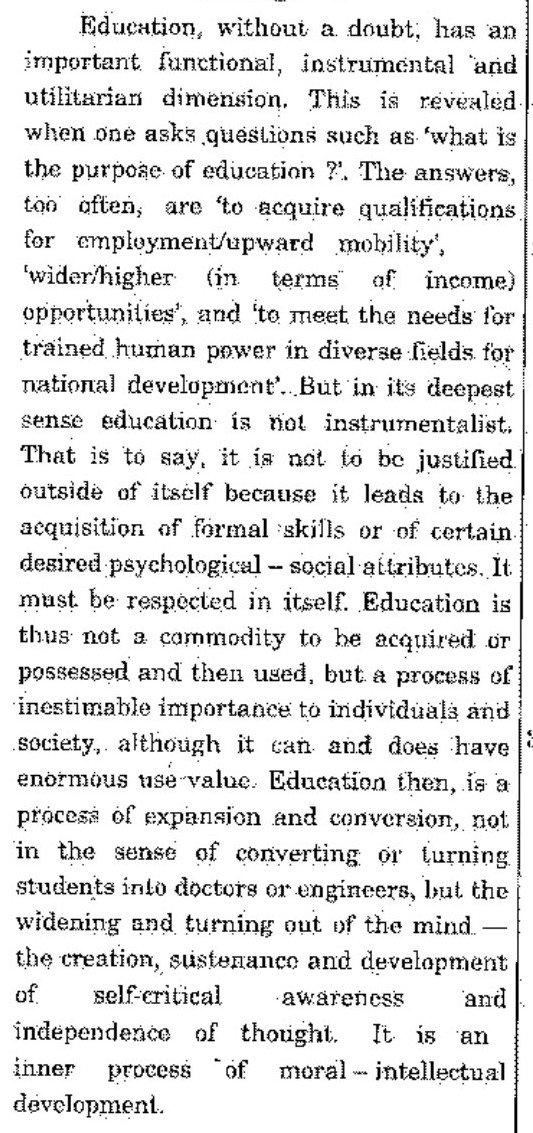
The passage describes education as a widening of the mind, building self-critical awareness and independence of thought. It specifically denies that education is about turning students into doctors or engineers. So the process it describes concerns how a person thinks, not the job or income that may follow. Remember: whenever an option names a career, a qualification or an income result, it is the instrumentalist view that the passage argues against.
Why each option is right or wrong
(a) Wrong. The passage rejects the idea that education merely turns students into trained professionals.
(b) Wrong. Higher income is a by-product of education, not what the process itself is.
(c) Right. Developing self-critical awareness and independence of thought is the passage's own description of education.
(d) Wrong. Qualifications for upward mobility are instrumental outcomes, which the passage treats as secondary.
Answer: UPSC’s key. Explanation: written by UPSC Grade, not by UPSC.