bthere should be a balance between work and leisure
cworking is a tyranny which we have to face
dhuman’s understanding of the nature of work is essential
AnswerUPSC’s answer is (a).
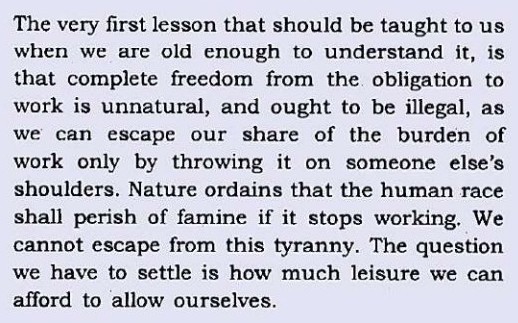
The author's central claim is that freedom from the duty to work is unnatural: nobody escapes their share except by loading it onto someone else, and humanity would starve if all work stopped. Work is therefore essential. How much leisure we can afford is only the open question left at the end, and calling work a tyranny describes how unavoidable it is, not the main idea.
Why each option is right or wrong
(a) Correct: the passage opens by saying freedom from work is unnatural and that people would perish if work stopped.
(b) Work-leisure balance is only raised as the question left to settle; it is not the main argument.
(c) Tyranny describes how work cannot be escaped, but it is not the author's main message.
(d) Understanding the nature of work is not the topic; the passage asserts that work is necessary.
Answer: UPSC’s key. Explanation: written by UPSC Grade, not by UPSC.