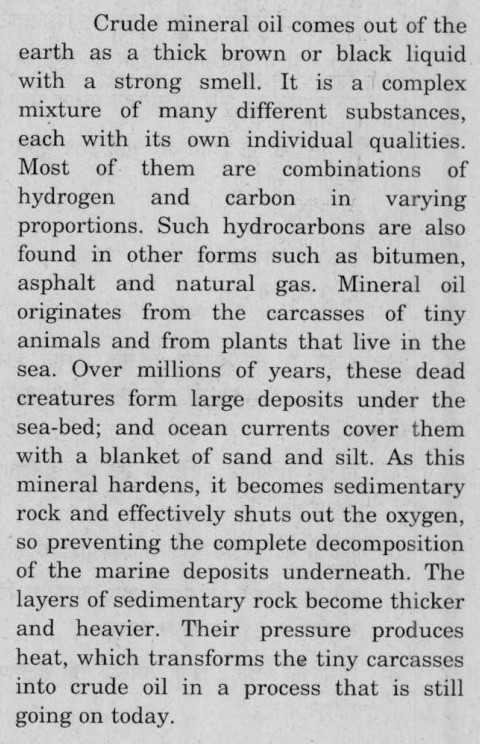
Sedimentary rock leads to the formation of oil deposits because
athere are no saline conditions below it.
bit allows some dissolved oxygen to enter the dead organic matter below it.
cweight of overlying sediment layers causes the production of heat.
dit contains the substances that catalyze the chemical reactions required to change dead organisms into oil.
AnswerUPSC’s answer is (c).
As the layers of sedimentary rock grow thicker and heavier, their pressure produces heat, and this heat transforms the buried carcasses into crude oil. So the link is the weight of the overlying layers generating heat. The rock does not let oxygen in (it shuts it out), the passage says nothing about salinity beneath the rock, and no catalysing substances are mentioned.
Why each option is right or wrong
(a) Wrong. Salinity below the rock is not discussed.
(b) Wrong. The rock shuts oxygen out, which is the opposite.
(c) Right. The weight of overlying layers produces the heat that forms oil.
(d) Wrong. No catalysing substances are mentioned.
Answer: UPSC’s key. Explanation: written by UPSC Grade, not by UPSC.