UPSC Prelims 2012 · CSAT
Question 30: Reading Comprehension
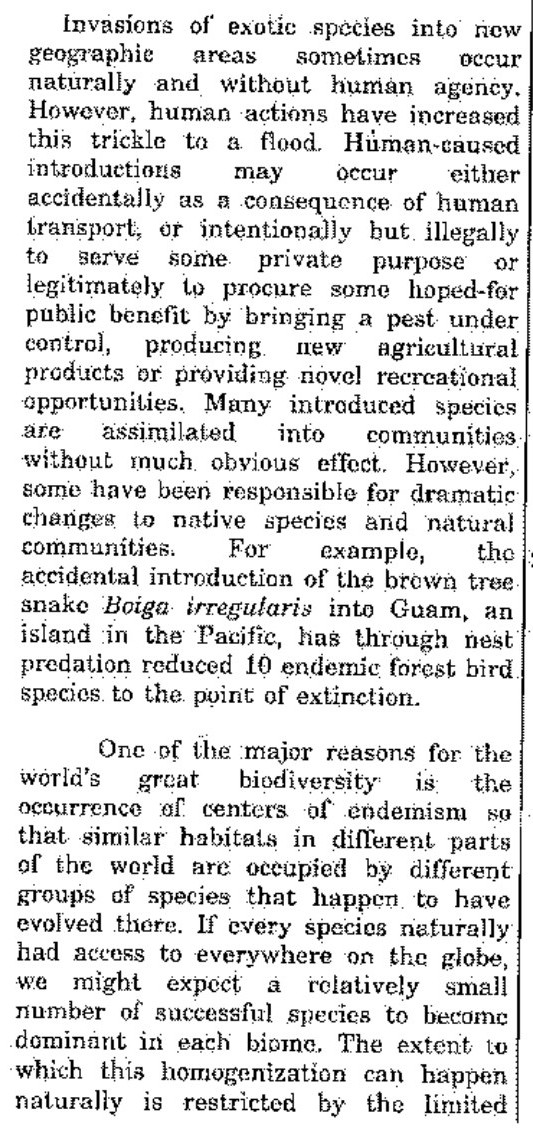
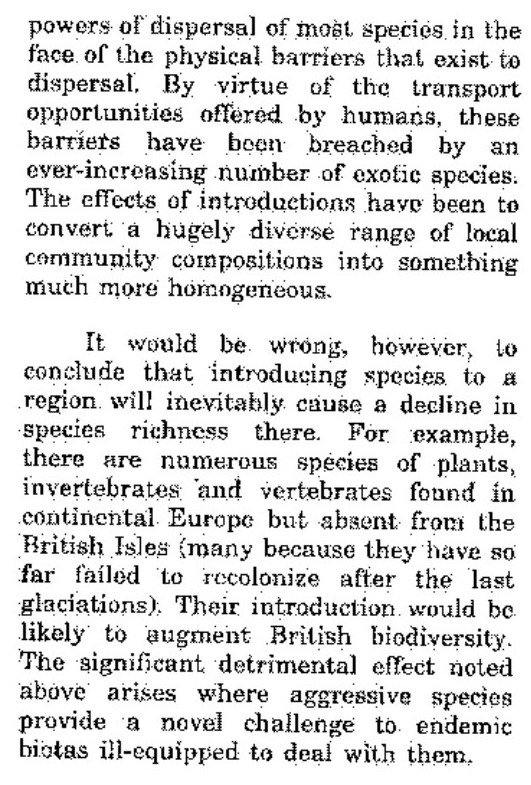
How is homogenization prevented under natural conditions ?
AnswerUPSC’s answer is (d).
The passage ties the world's great diversity to centres of endemism, where groups of species evolved in a place and fill the habitats there (statement a). Natural homogenisation is limited by the weak dispersal powers of most species against physical barriers such as oceans and mountain ranges (statement b). Species being well suited to their local physical and climatic conditions (statement c) is the other side of endemism and keeps any one group from taking over everywhere. All three work together to prevent homogenisation.
Why each option is right or wrong
- (a) Part of the answer. Endemic groups that evolved in particular places occupy those habitats, keeping communities distinct.
- (b) Part of the answer. Oceans and mountains are physical barriers that limit dispersal.
- (c) Part of the answer. Species well adapted to local conditions are not easily displaced everywhere.
- (d) Right. All three act against natural homogenisation.
Answer: UPSC’s key. Explanation: written by UPSC Grade, not by UPSC.
Source: UPSC, Civil Services (Preliminary) Examination 2012, General Studies Paper II (CSAT), Series A. The paper on upsc.gov.in.